 Iranco Magazine Team
B2B atlas of Tous, Chenaran, Food Tech Park, saffron cluster and Dogharoun/Sarakhs export gates
B2B Wholesale Sourcing · Razavi Khorasan
Mashhad Food Industry Factories; Wholesale Atlas, Afghanistan Export & Central Asia Transit
Razavi Khorasan serves simultaneously as a domestic supply hub, an export base for Afghanistan, and a transit gateway to Central Asia. For cash-and-carry wholesalers, chain distributors, Afghan exporters and CIS commercial buyers, understanding Mashhad's layered production ecosystem — from agricultural inputs through processing, quality control and packaging, to exit via the Sarakhs and Dogharoun border gates — is the foundation of B2B decision-making. The Iranco platform combines statistical data, published factory information and commercial directories to deliver an operational roadmap for wholesale price inquiry and product-to-export-route matching.
1. B2B Value for Wholesalers, Afghanistan Exports & Central Asia Buyers
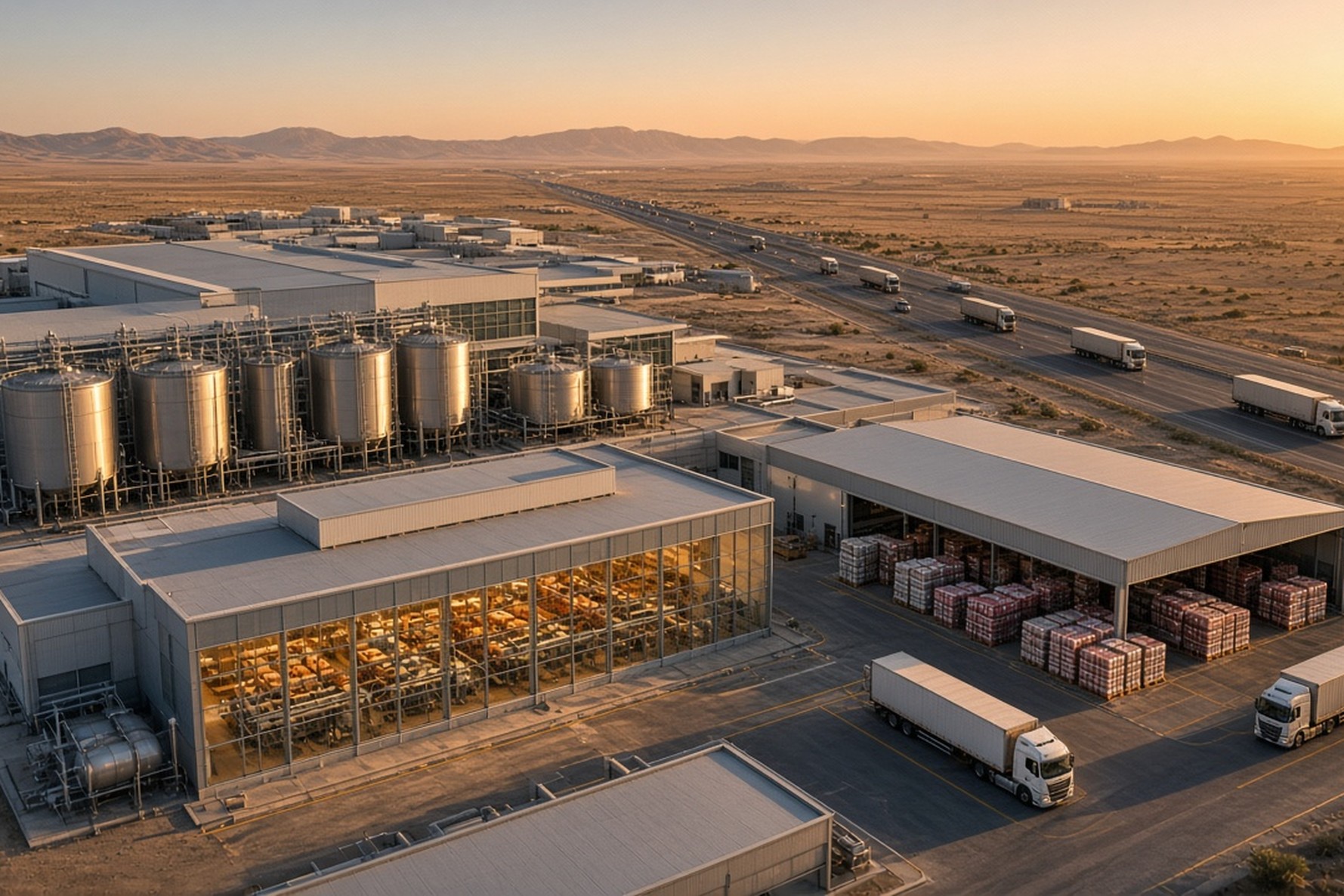
Mashhad's wholesale food market rests on four intersecting layers that every B2B buyer should map in their supply chain before requesting a price quote. The first layer is agricultural inputs and raw materials: industrial tomatoes, potatoes, raw saffron, flour and edible oil fed into processing lines from Mashhad's outskirts, Quchan, Fariman and surrounding villages. The second layer comprises processing and packaging units in the Tous and Chenaran industrial cities, the Mashhad–Quchan corridor and the Northeast Food Technology Park, producing semi-finished and finished goods at industrial scale.
The third layer is quality control, laboratory testing and export packaging: accredited laboratories, health certificate issuance, ISIRI-compliant labelling and alignment with destination-market requirements. The fourth layer — transit and export gateways — the Sarakhs rail line to Turkmenistan and Central Asia, and the Dogharoun land border to Herat and Kabul — determines which factory is logistically and documentarily optimal for each export destination.
- Cash-and-carry wholesalers and retail chains: direct access to production lines with stable margins
- Afghanistan exporters: product alignment with Dogharoun customs and health/origin document packages
- CIS buyers: Sarakhs rail route and HS codes compatible with destination tariffs
- Catering and institutional supply: industrial bread, canned goods and tomato paste with stable capacity
2. Methodological Note: Public Registry Limitations & Atlas Structure
Unlike some industries with centralised unit registries, Mashhad's food sector has no single public, comprehensive factory directory. Information is fragmented: provincial official statistics, factory self-announcements, commercial listings and customs data. The Iranco atlas reconstructs the B2B decision map by combining these sources — saffron and processed-product production statistics, declared holding capacities and documented examples of active units — not as an official registry, but as an operational guide for inquiry and supplier-to-buyer matching.
3. Economic Foundations: Saffron, Fruit & Vegetable Processing & Key Players
Razavi Khorasan is Iran's largest saffron producer. Estimated production for 1404 SH is approximately 180 tons of dried saffron, placing the province at the top of the global supply chain. Mashhad's history of fruit and vegetable processing dates to decades before the revolution; canned goods, compotes, tomato paste and fruit juice have been the region's traditional food-industry focus and are now complemented by modern production lines.
In the private sector of Tous Industrial City, units such as Golshad (food products and packaging) and Mehrad Chashni Tous (condiments, spices and single-serve products) are documented examples of private-sector operators. Alongside them, Astan Quds Razavi through Razavi Foods — with 14 production lines and annual capacity of approximately 44,000 tons — and Qods Khorasan in industrial bread, canned goods and base food products form the pillars of institutional and pilgrim hospitality supply.
- Saffron: production cluster in Fariman, Torbat Heydariyeh and Mashhad outskirts — exports under ISIRI 259
- Fruit & vegetable processing: tomato paste, canned goods, compotes — stable domestic demand and Afghanistan exports
- Private sector in Tous: SKU diversity in condiments, packaging and semi-prepared products
- Endowment holdings: high capacity for bread, canned goods and bulk supply
4. Industrial Hubs: Tous, Technology Park, Chenaran & Mashhad–Quchan Corridor
Tous Industrial City, with approximately 800 registered units (not all food-related; includes metal, plastics and other sectors), is the largest industrial cluster on Mashhad's outskirts. Industrial wastewater treatment infrastructure with capacity of approximately 6,000 cubic metres per day enables processing units to meet environmental standards. The Northeast Food Technology Park in northeastern Mashhad targets concentration of technology, laboratory services and knowledge-based units.
The Chenaran processing cluster on the Mashhad–Quchan route hosts medium and large units producing tomato paste, canned goods and processed agricultural products. Behzist Danesh is an example of a unit with laboratory and technology facilities in the Food Technology Park and a production line in Chenaran — a model of separating R&D from industrial production. The Mashhad–Quchan corridor also serves as a tomato supply band and input logistics axis for tomato paste and canned goods lines.
5. B2B Decision Matrix: Industrial Hub, Sub-Sector, Documented Examples, HS & Export Routes
| Industrial Hub | Sub-Sectors | Documented Examples | HS Guide | Export Routes |
|---|---|---|---|---|
| Tous Industrial City | Tomato paste, condiments, packaging, snacks | Golshad, Mehrad Chashni Tous | 2002, 2103, 1905 | Dogharoun, Sarakhs, EXW factory gate |
| Mashhad–Quchan Corridor | Tomato inputs, paste, vegetable canned goods | Mid-tier processing units | 2002, 2005, 2009 | CPT Mashhad customs, Dogharoun |
| Chenaran Cluster | Tomato paste, canned goods, compotes | Behzist Danesh (production) | 2002, 2005, 2008 | Dogharoun, Afghanistan overland freight |
| Food Technology Park | Laboratory, QC, packaging technology | Behzist Danesh (laboratory) | — (support services) | Export support for regional units |
| Razavi Cluster (Astan) | Industrial bread, canned goods, base products | Razavi Foods (14 lines), Qods Khorasan | 1905, 2005, 2106 | Domestic supply, limited institutional exports |
| Saffron Cluster | Drying, packaging, grading | Units in Fariman and Torbat Heydariyeh | 0910.20, 0910.30 | Air/land; Europe, Gulf, CIS |
6. Production Technologies: Tomato Paste, Canned Goods, Industrial Bread & Saffron Drying
Tomato Paste — Vacuum Evaporation & Brix 25 (ISIRI 761)
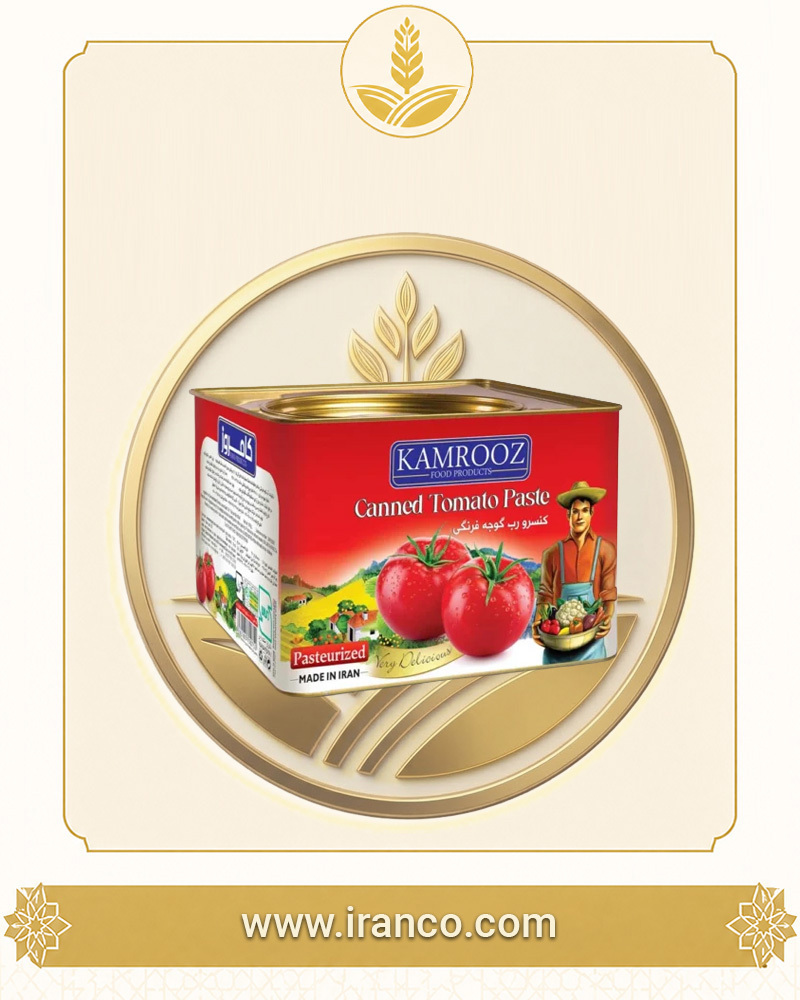
Industrial tomato paste lines in Mashhad and Chenaran typically use vacuum evaporation to preserve colour and reduce thermal exposure time. Target concentration of Brix 25 complies with national standard ISIRI 761: moisture, soluble solids ratio, pH and heavy metals are controlled in the laboratory. For Afghanistan exports, tin or bulk packaging with bilingual labelling and CoA is essential.
Canned Goods — Low-Acid Thermal Process
Low-acid products (beans, corn, whole/peeled tomatoes) undergo retort thermal processing for pasteurisation/sterilisation: filling, seaming, then autoclave with a recorded temperature–pressure profile. pH control, holding time and seal integrity in QC determine 18–24 month shelf life.
Industrial Bread — Razavi & Qods Khorasan Lines
Industrial lavash and sangak bread is produced on continuous lines with dough mixing, resting, tunnel baking and MAP/polyethylene packaging. Razavi Foods bread lines are designed for pilgrim, hospital and institutional contract supply; B2B buyers should factor quota and weekly production schedules into their inquiry.
Saffron Drying
After harvest, saffron threads are dried at controlled temperature (typically 45–55 °C) to preserve Crocin and Safranal. Grading is based on thread length, moisture and impurities; packaging in foil-lined containers or tins is exported under ISIRI 259.
7. Transit & Export: Sarakhs, Dogharoun & Document Package
The Sarakhs rail line is Mashhad's primary land export gateway to Turkmenistan and Central Asia; packaged food products (tomato paste, canned goods, biscuits) move by rail wagon or container with destination HS customs alignment. Dogharoun border, with approximately 12,000 trucks passing monthly, is the dominant route for exports to Afghanistan (Herat, Kabul) — especially for tomato paste, oil, flour and canned goods.
The standard food export document package from Mashhad typically includes:
- Certificate of Origin: issued by the Chamber of Commerce or accredited authorities
- Health Certificate: from the Food and Drug Administration or an accredited laboratory
- Commercial invoice, packing list, bill of lading and cargo insurance
- Product labelling and CoA — ISIRI compliance and Halal certification where required
8. Quality & Food Safety Standards
- Saffron — ISIRI 259: moisture, Crocin, Safranal, picrocrocin; grading into Sargol, Pushal and Negin
- Tomato paste — ISIRI 761: minimum Brix 25, pH, salt, heavy metals Pb/Cd/As
- Pesticide MRLs: residues in fruit, vegetables and saffron per Iran and destination export MRL lists
- Low-acid canned goods: retort thermal profile, seal test, pH > 4.6 with mandatory sterilisation process
9. Wholesale Buyer FAQ
What is the delivery point for wholesale orders?
The most common terms are EXW factory gate (Tous, Chenaran or Mashhad), CPT/FCA Mashhad customs for exports, and delivery at Dogharoun border or Sarakhs rail loading. Term selection based on destination (Afghanistan, CIS or domestic) is specified in the inquiry.
Is private label available for tomato paste?
Yes; many tomato paste lines in Tous and Chenaran produce custom labels, Brix 25 and tin/bulk packaging at minimum order quantities (typically from several tons or a specified pallet count). Label design and sample approval before bulk production are essential.
How does quota work for Razavi/Qods industrial bread?
Astan industrial bread lines prioritise pilgrim supply and fixed contracts. B2B buyers should declare weekly schedules and monthly volumes in advance; surplus capacity for cash-and-carry and catering can be coordinated in specified periods (outside peak pilgrimage seasons).
What are winter shipping considerations for Afghanistan and CIS?
In cold seasons, canned goods and tomato paste are more resilient; freeze-sensitive products require different packaging and timing. The Dogharoun route may face snow delays — a 3–5 day buffer and cargo insurance are recommended. Sarakhs rail to CIS is more stable in winter than some mountain crossings.
10. 7-Step Wholesale Inquiry Guide on Iranco
To reduce sourcing risk from Mashhad's fragmented factory landscape, the standard B2B process on Iranco is recommended as follows:
- Define SKU and technical specifications: Brix 25 paste, canned goods, saffron grade, industrial bread — with weight and packaging
- Set tonnage and delivery window: minimum order, pallet or FCL and required date
- Select delivery point and destination: EXW, CPT border, Afghanistan, CIS or domestic
- Submit inquiry on the Iranco portal: send the form with the above details
- Receive quotation and proforma invoice: compare Tous, Chenaran and specialist cluster units
- Sample and CoA (if required): quality confirmation before bulk order
- Confirm contract, loading and export documents: certificate of origin, health certificate and logistics coordination
Featured Products
Related Articles



