 Iranco Magazine Team
Technical specs, Brix and Bostwick, patulin, bag-in-drum packaging and container logistics
Quality & standards · Aseptic fruit purée · Bulk buying
Aseptic fruit purée: bulk purchasing and storage guide
Technical specs, quality standards, lab tests, warehousing and container logistics for procurement managers and food processors.
Introduction
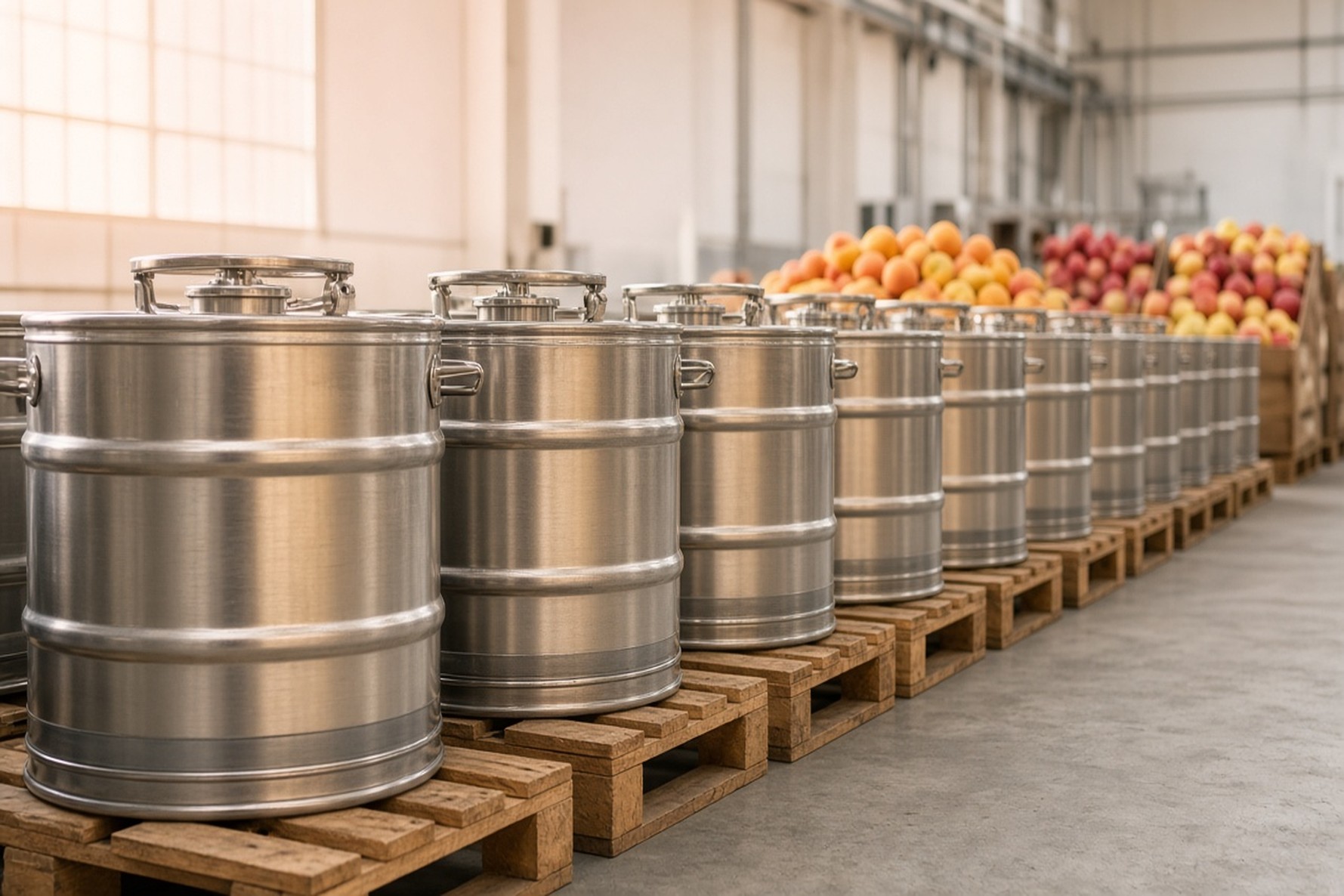
Aseptic fruit purée is a strategic input for nectar, dairy, confectionery and baby food lines, requiring tight biochemical control and intact barrier packaging. High-temperature short-time processing and bag-in-drum aseptic filling reduce dependence on deep-freeze logistics. Iran’s apple and stone-fruit capacity makes it a regional hub; pectin variability, colour oxidation and customs rules make bulk buying a specialist discipline.
1. Supply chain and processing geography in Iran
West and East Azerbaijan (Urmia, Salmas, Maragheh) lead apple and stone-fruit purée; Khorasan for peach and apricot; Mazandaran and Fars for kiwi and citrus derivatives.
Season: apricot late May–August; peach August–September; apple September–mid January. Short orchard-to-plant time protects pectin and acidity.
2. Aseptic vs frozen vs clear concentrate
Choice depends on plant equipment, logistics and sensory target. Aseptic purée keeps colloids; clear concentrate suits transparent juice; frozen purée suits premium ice cream but cold chain cost is high.
| Parameter | Single-strength aseptic purée | Frozen purée | Clear concentrate |
|---|---|---|---|
| Definition | Refined fruit flesh, no dewatering | Frozen pulp, no high heat | Clarified juice concentrate, no fibre |
| Brix | 10–14 (natural) | 10–14 | 65–70 |
| Fibre | Full fibre and pectin | Natural cell structure | No pulp |
| Storage | 10–20°C | −18°C | Chilled to ambient cool |
| Shelf life | 12–24 months | 12–24 months | 18–24 months |
| Logistics | Medium; no constant reefer | Very high | Low per dry matter |
3. Purée types and rheology
Bostwick at 30 s and 20°C indicates flow; lower numbers mean thicker texture. 0.4–0.6 mm screens for baby food; 0.8–1.2 mm for dairy and jam.
Brix-to-acid ratio drives sugar and acid adjustment on the finishing line. Industrial orders must state screen, Bostwick and Brix.
| Type | Brix | Acidity | pH | Bostwick (cm/30s) | Screen (mm) |
|---|---|---|---|---|---|
| Apple SS | 10–13 | 0.25–0.60 malic | 3.4–4.0 | 6–12 | 0.6–0.8 |
| Apple conc. | 30–32 | 0.80–1.80 malic | 3.4–3.9 | 9–18 | 0.5–0.8 |
| Saffron peach | 10.5–13.5 | 0.35–0.75 citric | 3.6–4.2 | 8–14 | 0.6–1.0 |
| Apricot | 10–12.5 | 0.90–1.60 citric | 3.4–3.9 | 7–13 | 0.6–0.8 |
4. Lab tests and mycotoxin limits
Apple patulin max 50 ppb general and 25 ppb infant food (Codex and national 11692). Heavy metals by GF-AAS; negative Alicyclobacillus on COA to avoid non-gassy spoilage.
| Test | General limit | Sensitive use | If exceeded |
|---|---|---|---|
| TPC | <10 CFU/g | <10 CFU/g | Spoilage in storage |
| Yeast & mould | <1 CFU/g | <1 CFU/g | Aseptic bag swelling |
| TAB | Negative in 10 g | Negative | Off odour |
| Patulin (apple) | 50 ppb | 25 ppb | Customs hold |
| Lead Pb | 0.10 mg/kg | 0.05 mg/kg | Health cert void |
5. Process and bag-in-drum packaging
Wash, sort, destone, hot break 85–90°C, two-stage screens, vacuum deaeration, UHT 102–108°C for 60–90 s, cool below 25°C and aseptic fill.
55 gal bag: PE outer, aluminium foil barrier (OTR <0.1), food-grade inner PE; 0.8–1.0 mm steel drum with epoxy lining.
6. Warehousing and texture stability
Optimal 10–20°C and RH <65%. Above 25–30°C Maillard browning affects peach and apricot. Max two pallet tiers high.
After opening, use within 48–72 h at 0–4°C; surplus freeze at −18°C for up to 6 months.
7. Container logistics
Four drums per 100×120 or 110×130 cm pallet; PP strapping and stretch wrap. Tropical sea routes: reefer 10–15°C or insulated box; air bags between rows.
| Mode | Pallets | Drums | Net (t) | Gross (t) |
|---|---|---|---|---|
| 20 ft FCL | 20 | 80 | 17.0–17.6 | 19.2–19.8 |
| 40 ft FCL | 22–24 | 88–96 | 18.9–20.6 | 21.5–23.2 |
| Road curtain | 20–22 | 80–88 | 17.2–18.9 | 19.5–21.2 |
| Reefer | 20 | 80 | 17.0–17.6 | 19.2–19.8 |
8. Export markets and competitors
Russia and Belarus import Iranian apple and peach purée; Iraq and Afghanistan for nectar and fruit bases; UAE and Oman for dairy and beverage lines.
| Origin | Edge | Challenge | Main markets |
|---|---|---|---|
| Iran | Cost, dry matter, sun flavour | QC consistency at small plants | Russia, Iraq, UAE |
| Turkey | Marketing, EU tariffs | Fruit and energy cost | EU, Russia |
| China | Scale | Apple acidity, stone fruit | Asia, North America |
| Greece | EU peach brand | Packaging cost | W. Europe, Gulf |
9. Pricing and seasonality
Raw fruit is >50% of cost; yield 1.2–1.4 t fruit per t single-strength purée and 3.5–4.5 t for 30–32 Brix concentrate. Bag and drum 10–15% of cost. Early-season container contracts price best.
10. Industrial applications
Dairy: fruit yoghurt with low spore load. Nectar: 25–50% fruit with colloidal stability. Bakery: apple/apricot pectin for heat-stable fillings. Baby food: 0.4 mm screen and patulin <25 ppb.
11. Customs and documents
HS 2007.99 for fruit purée and paste; clear concentrates under 2009. Phytosanitary, full COA, origin, halal, B/L and packing list. Drum label: Brix, weights, lot, dates and storage temp.
Bulk buyer checklist (10 items)
Fix these in the sales contract before advance payment:
- Fix Brix, pH and total acidity per fruit acid type.
- Contractual Bostwick range and filter screen aperture.
- Patulin cap for apple purée (50 or 25 ppb) per end use.
- Negative Alicyclobacillus and yeast/mould on COA.
- No synthetic colour, added sugar or illegal dilution.
- Multi-layer bag with aluminium foil; sound steel drum.
- Net weight 210–215 kg per drum with tolerance.
- Pre-shipment sample matched to loading batch COA.
- Container type, lashings and air bags between pallets.
- Third-party inspection (SGS or equivalent) at load port.
12. RFQ data and supply via Iranco
State fruit type, Brix, Bostwick, screen, end use, drum/container volume, bag type, Incoterms and extra tests in writing.
Iranco links international buyers to validated Iranian aseptic purée lines and coordinates samples and shipment inspection.
FAQ
Shelf life of sealed aseptic purée?
Typically 12–24 months in cool dry storage below 22°C; 4–10°C helps light-coloured peach and apricot.
Use after opening the bag?
48–72 hours at 0–4°C; freeze surplus at −18°C up to 6 months.
Single-strength vs concentrated?
SS 10–14 Brix natural; concentrate 30–32 Brix after vacuum evaporation — lower freight per dry kg.
What does Bostwick measure?
Flow distance in 30 s — viscosity and suitability for nectar vs jam.
Why darkening in storage?
Maillard at high warehouse temp or oxygen ingress through poor barrier bags.
Patulin limit in apple purée?
50 ppb general; 25 ppb infant food.
Drums per 20 ft container?
80 × 220 L drums on 20 pallets; ~17 t net.
Direct supply from Iran?
Register technical specs on Iranco for producer matching and COA alignment.
Summary
Successful bulk purée buying rests on matching Bostwick and screen to your line, patulin and acidophile control, and foil bag integrity with warehouse temperature. Disciplined COA and documentation sustain plant yield for the buyer.
Featured Products


Related Articles



